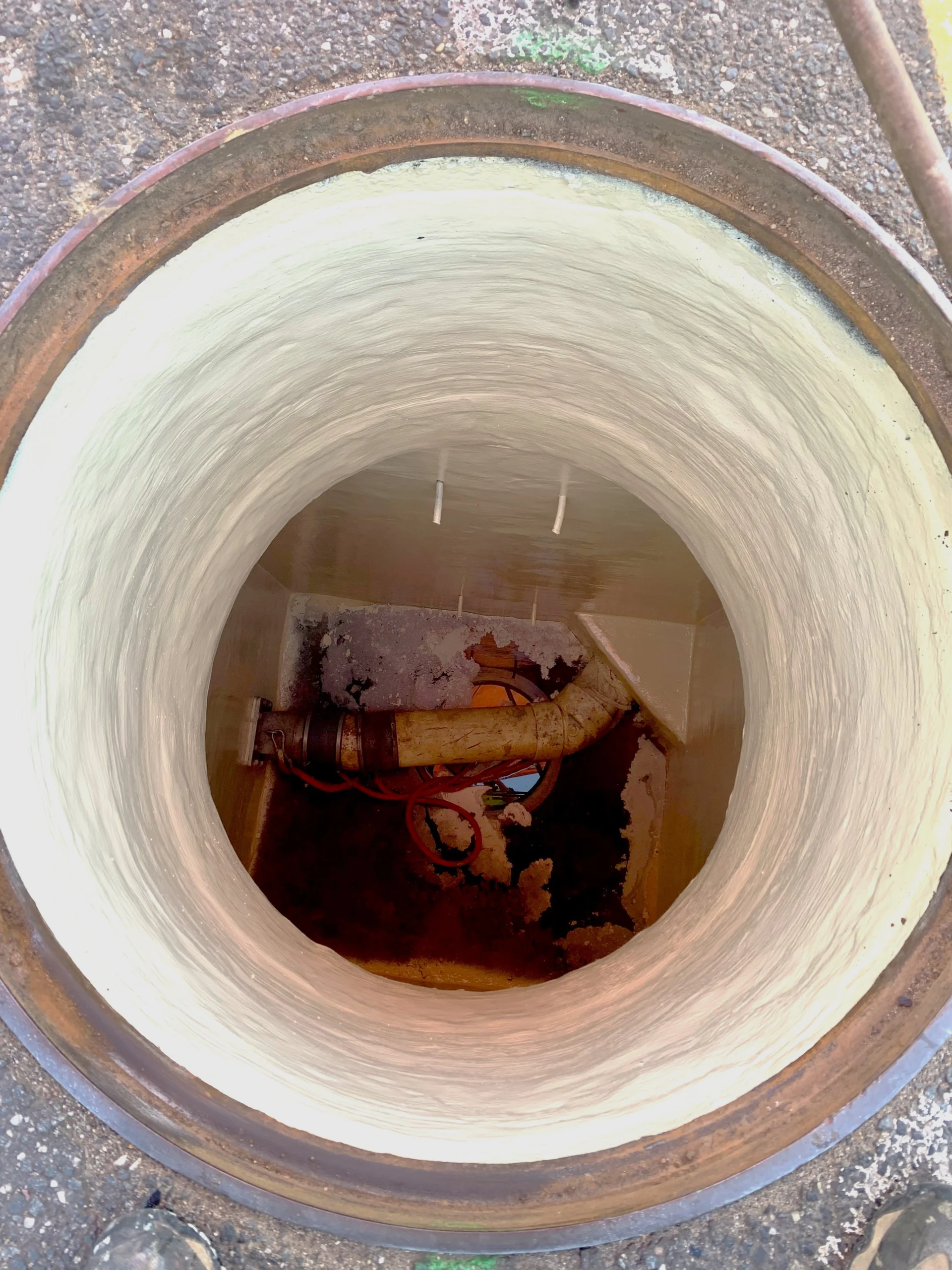
COMBATING CORROSION IN MANHOLES
Municipal infrastructure forms the backbone of urban areas. Sewer systems ensure the efficient transport and treatment of wastewater. However, the longevity and functionality of these systems are often threatened by corrosion, structural degradation, and environmental factors. Manholes, in particular, play a crucial role in infrastructure yet are often overlooked.
Understanding Corrosion in Sewer Infrastructure
Corrosion, a natural process driven by chemical reactions between materials and their environment, poses a significant threat to sewer infrastructure integrity. In wastewater environments, the primary driver of structural deterioration and water infiltration is microbiologically induced corrosion (MIC). This occurs when hydrogen sulfide, generated through microbial activity in anaerobic conditions, reacts with moisture and oxygen to form a highly corrosive compound that attacks concrete and metal substrates. The nature of municipal wastewater, coupled with the presence of abrasive solids, exacerbates the degradation of the surfaces within manholes, necessitating timely intervention and rehabilitation.
Manhole Rehabilitation: Importance and Challenges
Manholes serve as critical access points for maintenance and inspection within sewer networks, facilitating the flow of wastewater and providing ventilation. However, prolonged exposure to corrosive gases and moisture renders manholes susceptible to structural failure, infiltration, and exfiltration leading to more widespread problems. Corrosion-induced defects, including cracks, spalling and delamination, compromise the integrity of manhole structures, undermining the hydraulic efficiency of sewer systems — thus increasing operational costs. Furthermore, these problems stemming from corrosion pose risks to public health, environmental quality and infrastructure resilience.
Rehabilitating manholes presents multifaceted challenges, ranging from identifying corrosion hotspots to selecting suitable materials and techniques for repair and protection. Traditional rehabilitation methods often involve labor-intensive processes resulting in prolonged downtime, traffic disruptions, and escalating costs. Addressing these problems necessitates the adoption of innovative approaches, advanced materials, and collaborative partnerships to optimize efficiency, durability, and sustainability in manhole rehabilitation projects.