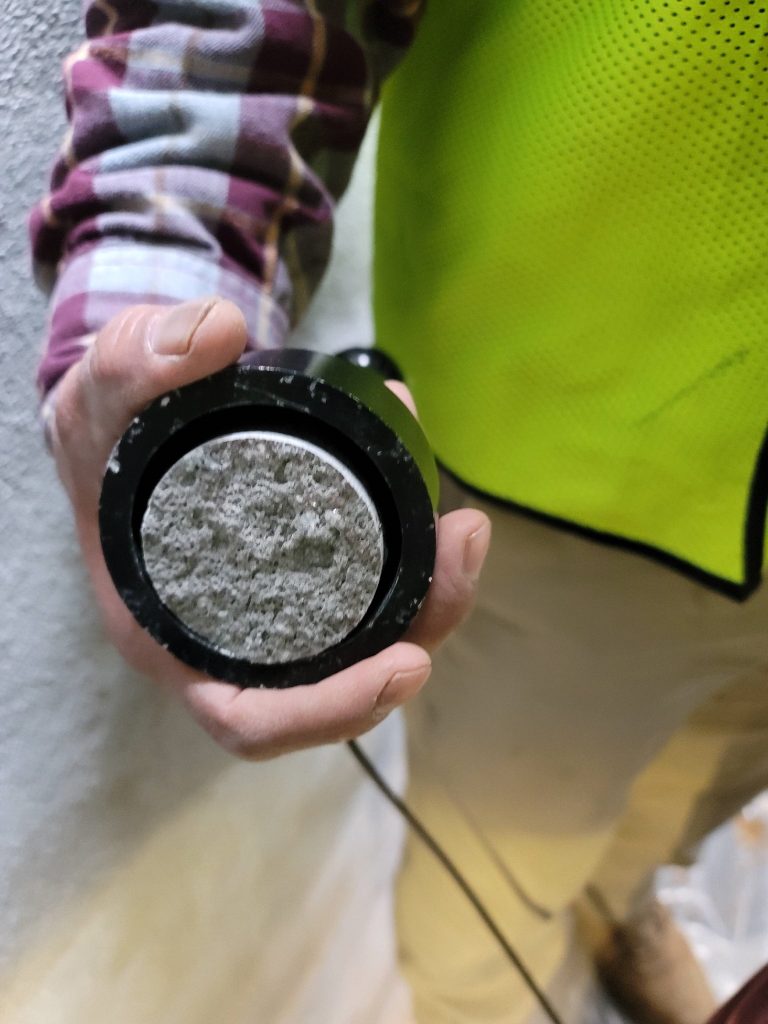
Both High-Voltage Spark Testing and Pull-Off Adhesion Testing per ASTM standards are widely used methods for evaluating the performance and integrity of linings and coatings in industrial applications, but they serve different purposes. Here’s a detailed breakdown of how each test works and what they measure:
High-Voltage Spark Testing
Purpose: The High-Voltage Spark Test is used to detect holidays, voids, pinholes, or discontinuities in corrosion-resistant coatings or electrical insulating linings that are applied to substrates like steel or concrete. This method is crucial in to ensuring the continuity of the protective coating and identifying weak points that might lead to failure under harsh conditions.
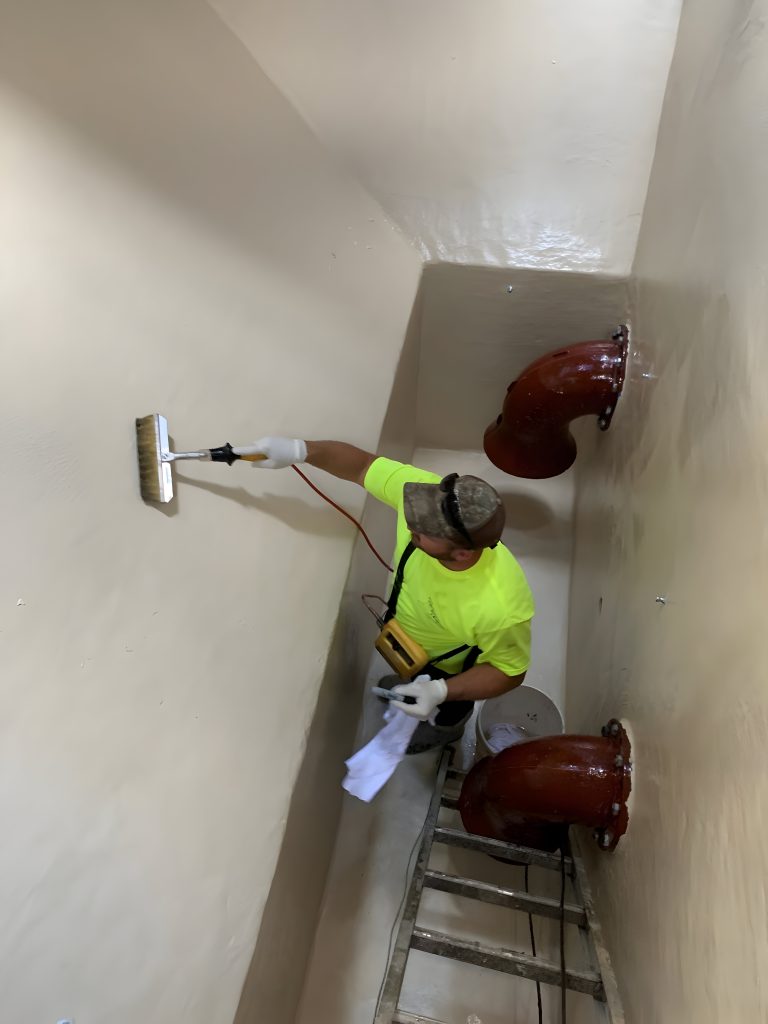
How it Works:
- This test involves applying a high-voltage electrical current to the surface of the lined or coated material. The voltage settings should be in compliance with ASTM standards for testing on concrete or steel substrates.
- The equipment usually consists of a high-voltage power supply, a probe, wand, brush or roller that moves across the surface, and a ground connection.
- The test is performed while the surface is dry, although in some cases, a conductive liquid (such as a salt solution) is applied to increase the effectiveness of the test, especially on thicker coatings.
- A conductive primer can also be used where necessary or required.
- If there are any defects, such as pinholes, voids or cracks, the electric current will jump through the defect to the substrate, creating an arc or spark. This is typically detectable either visually or with an audible sound, indicating the areas of failure
., which are marked for repair. - Once repairs are completed, the repaired areas may be retested, but the entire lining system should not be retested again, so as to avoid damaging the lining with the high voltage electric current.
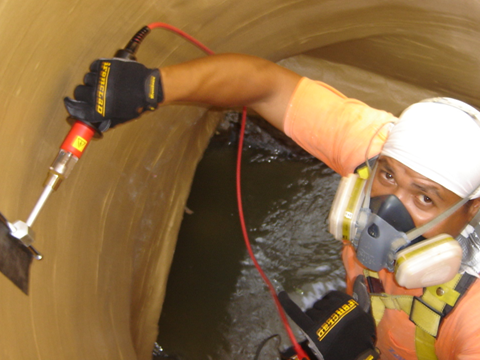
Applications:
- Primarily used for corrosion-resistant coatings and linings on all manner of steel and concrete structures where continuity of the coating or lining system is critical to long term performance.
- It’s especially important when linings are used in corrosive environments or electrical applications.
Results:
- Sparks or arcs detected during the test indicate discontinuity in the coating or lining, allowing for localized repair before the structure is put into service and significant damage or corrosion sets in.
- No sparks mean the lining is intact, and there are no detected holidays, ensuring protection against corrosion or other forms of damage.

Adhesion Testing
Purpose: The ASTM Pull Off tests are designed to measure the adhesion (bond) strength of coatings and linings, including substrate resurfacers, to the subject substrate, which can be steel, concrete, or other materials. This is critical for ensuring that the coating or lining remains bonded securely to the substrate during service, as poor adhesion can lead to peeling, delamination, or failure of the protective lining.
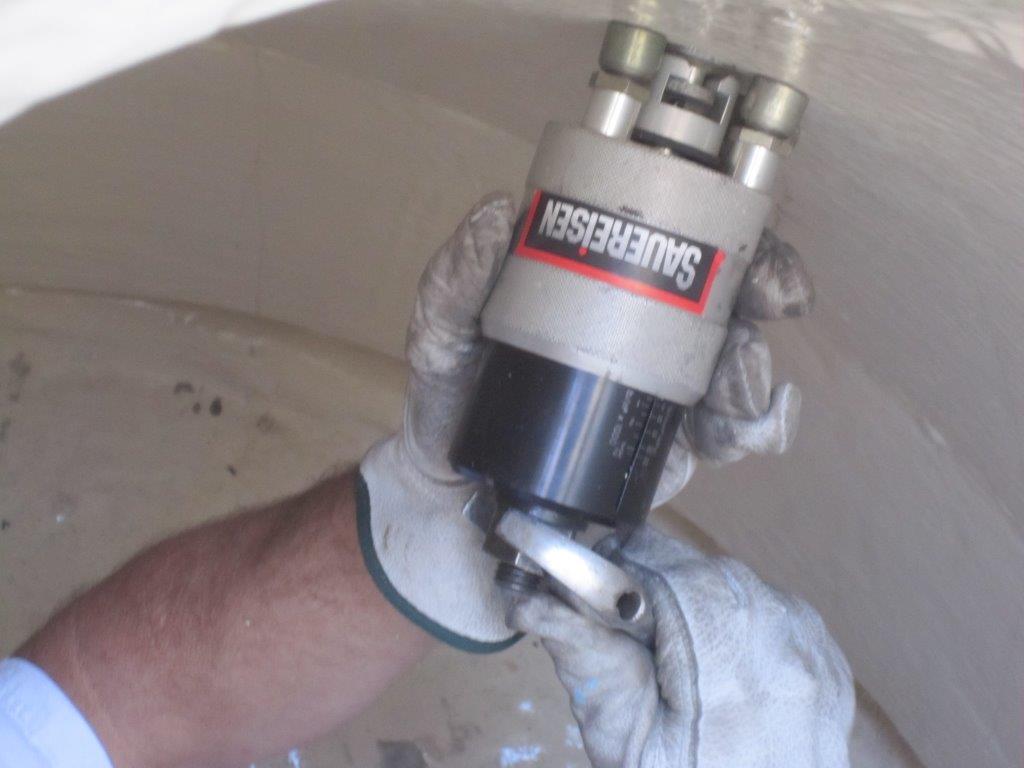
How it Works:
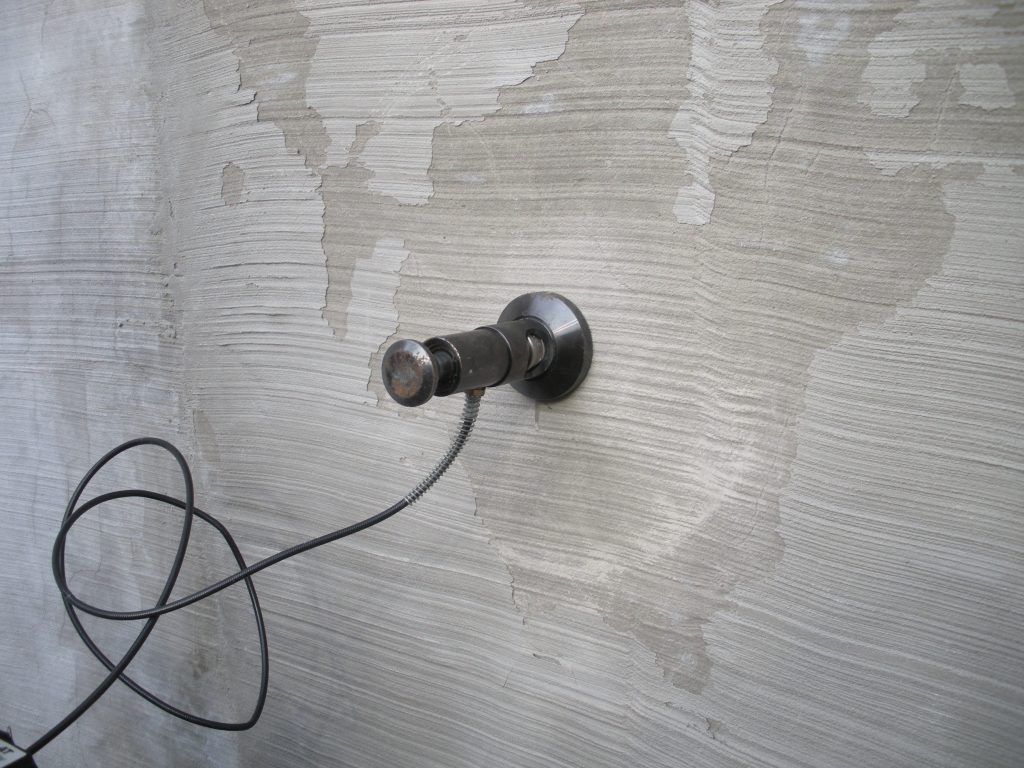
- The pull-off test involves bonding a dolly (a small disc or button) to the surface of the coating or lining using a strong adhesive. For pull tests on corrosion resistant linings, 50 millimeter dollies are recommended.
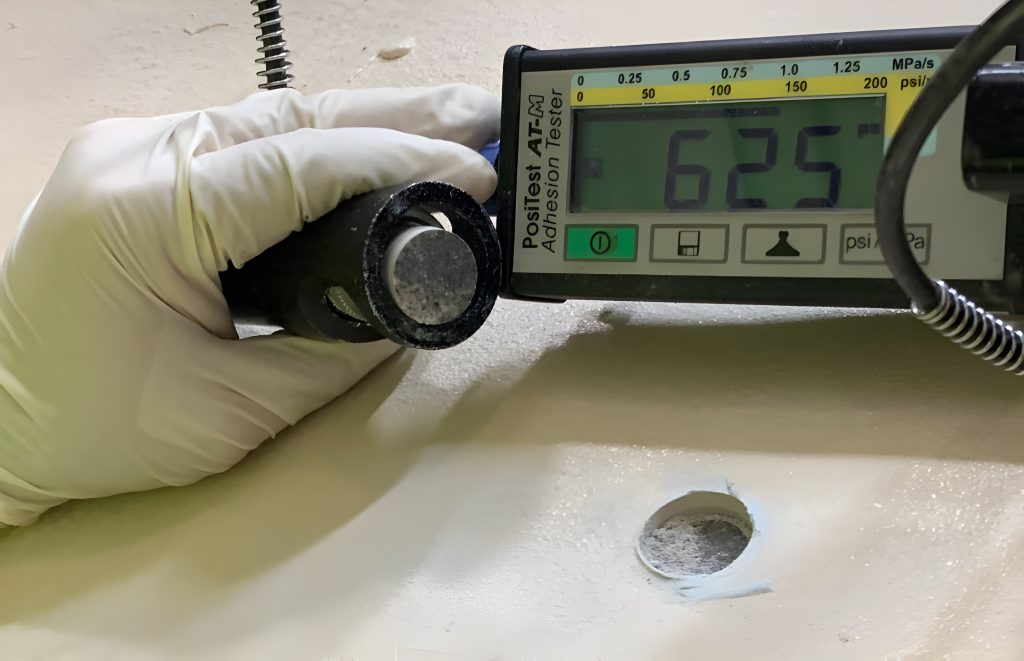
- Once the dolly is firmly attached (adhesive fully cured), the test involves using a testing machine to pull the dolly away from the substrate. The force required to pull the dolly off the surface is measured.
- The result is recorded as the adhesion strength or pull off strength, typically in units of pounds per square inch (psi) or newtons per square millimeter (N/mm²).
- If the coating or lining has good adhesion, it will resist detachment and require a significant amount of force to pull the dolly off. If the adhesion is poor, the coating may fail or separate from the substrate with less force. Specifying engineers typically determine the minimum pull off or adhesion value required based on industry standards and coating and lining manufacturers’ recommendations.

Applications:
- Used in quality control after coating application to assess the
integritybond strength of protective linings in structures requiring protection. - It’s especially critical for coatings and linings used in high-stress environments, such as those exposed to chemical attack, thermal cycling, or mechanical wear.
Results:
- High adhesion strength indicates that the coating or lining is well-bonded to the substrate and should perform well over time.
- Low adhesion strength indicates potential issues with the application of the coating (e.g., contamination, improper curing, poor surface preparation), which could lead to delamination or peeling under stress or, even in normal service.
- If failure occurs at the substrate level (rather than at the coating interface), it can indicate a problem with the surface preparation or the substrate itself.
Comparing the Two Methods:
| Testing | ASTM High-Voltage Spark Testing | ASTM Pull-Off Tests |
| Purpose | Detects pinholes, holidays, or discontinuities in the coating. | Measures adhesion (bond) strength between coating and substrate. |
| Key Focus | Surface integrity (continuity) of the coating or lining. | Bond strength of the coating to the substrate. |
| Application | Used for corrosion-resistant or insulating linings. | Used for checking the performance of coatings under stress. |
| Testing Method | Electric current applied to detect defects. | Tensile force applied to measure adhesion strength. |
| Result | Sparks or arcs indicate holidays or defects in the lining. | Measured pull off force indicates adhesion quantitatively. |
| Primary Use | Typically used in corrosion protection, insulating or electrical applications. | Common in quality control measurement of corrosion resistant coatings and linings. |
When to Use Each Test:
- ASTM High-Voltage Spark Testing is ideal for quickly identifying defects or holidays in coatings where corrosion protection or insulating properties are critical. It’s used when you want to ensure that the coating is free from pinholes and voids, especially in environments where corrosion or electrical conductivity could be problematic.
- ASTM Pull-Off Testing is more suitable when you are concerned with adhesion quality and the ability of the coating to stay bonded to the substrate, especially under mechanical stress, wear, or chemical exposure. This test is important for ensuring the long-term durability of the lining and preventing failure due to peeling or delamination.
In many industrial settings, both tests are used together to provide a comprehensive understanding of the coating’s integrity. Spark testing can identify surface defects, while adhesion testing can confirm that the lining is securely bonded to the substrate.
Sauereisen offers Expert Advice corrosive environments everywhere.
Sauereisen offers expert advice on product solutions for corrosive environments and provides application guidance tailored to your needs. We’ll help you find the right solution—and be with you every step of the way. Contact us at www.sauereisen.com or call Sauereisen at +1 (412) 963.0303 today — to get started.