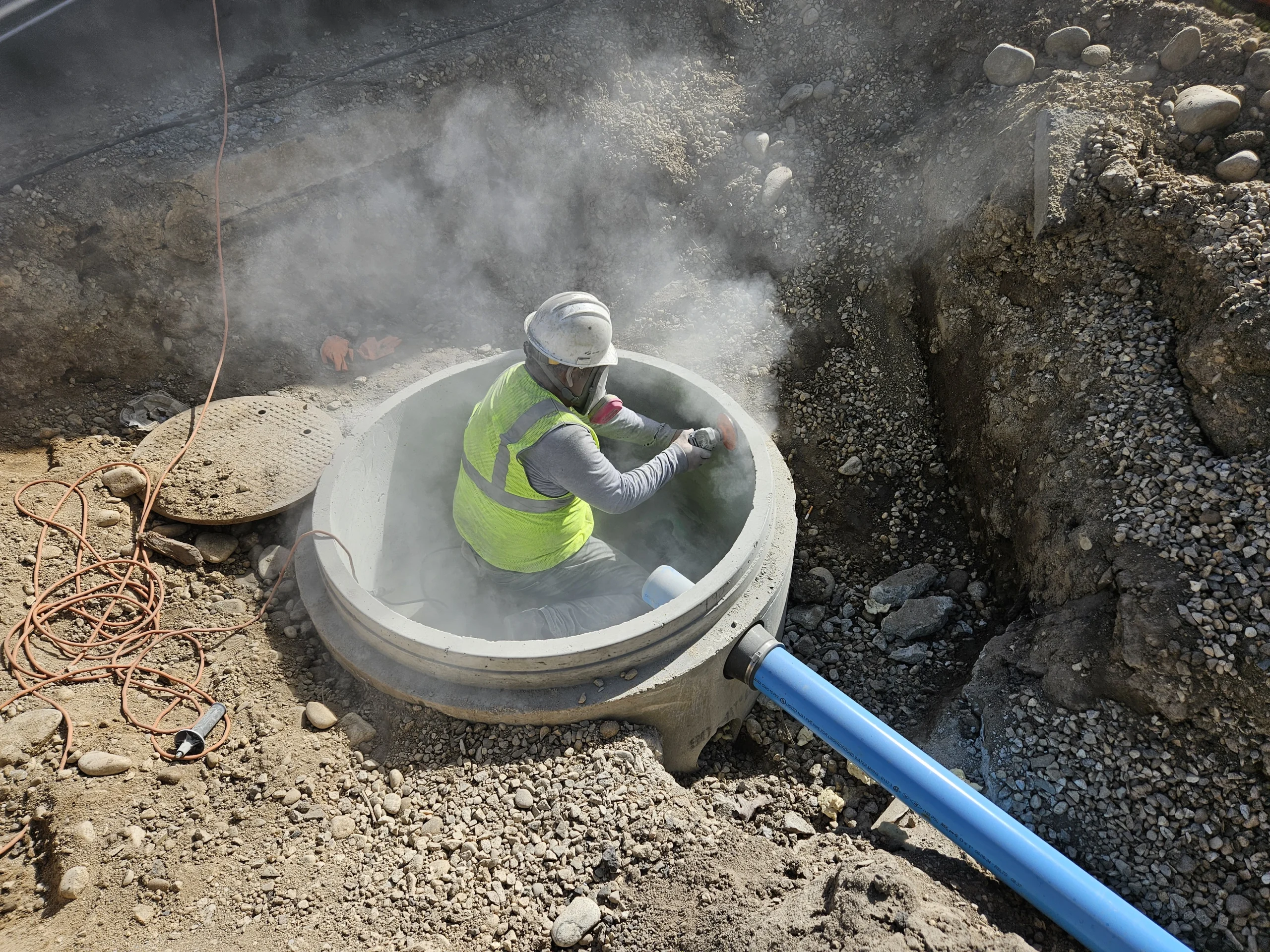
Prepare your surface for a newly applied coating with our step-by-step guide. Proper surface preparation requires knowledge, experience, and skill. It also calls for specialized equipment, tools, and cleaners or other chemicals. To assist anyone applying a new coating system to metal or concrete, we have compiled a 9-step how-to guide with examples and explanations of surface prep methods.
Surface Preparation in 9 Steps
Prepping surfaces before a new corrosion resistant coating is the most important step in the process of protecting infrastructure from the attack of corrosion. You must assess surface conditions, remove old coatings and contaminants, and create rough surfaces for optimal coating adhesion. To discover everything that goes into it, find our 10 steps preparing a surface below.
Step 1: Assess Surface Conditions
To initiate effective surface preparations for coating’s work, you must evaluate the state of the metal or concrete. Industry standards, such as Association for Materials Protection and Performance AMPP (NACE/SSPC) and International Concrete Repair Institute (ICRI) can guide the assessment.
The Association for Materials Protection and Performance (AMPP) is the largest global community for corrosion and coatings expertise. We’re here to safeguard assets through education, credentialing, accreditation, innovation and standardization.
The International Concrete Repair Institute (ICRI) provides guidelines for assessing concrete substrates, which are crucial for ensuring successful repair, resurfacing, and coating applications. ICRI’s methods focus on evaluating surface conditions to determine if the concrete is suitable for coating. ICRI provides a Surface Profile Chart to evaluate the roughness of a concrete substrate. Surface profile is rated on a scale from 1 to 10, where 1 is a very smooth surface and 10 is a very rough surface. Methods of evaluation include Visual Comparison: Using the ICRI Surface Profile Comparator or using devices like a profilometer to measure the degree of roughness.

Step 2: Remove Existing Coatings
You almost always need to strip away existing coatings before applying a new coating. Placing a new coating over a deteriorated, contaminated, failing one allows underlying issues, such as contamination, blistering, chipping, or delamination, to persist beneath the new coating. Remove the existing coating entirely until you expose bare metal or stable concrete to extend the service life of the new coating.
Step 3: Remove Surface Contaminants
In industrial environments, many surfaces contain oil, grease, and other contaminants, all of which you must remove to strengthen the bond between the substrate and the fresh coating.
Surface contaminants, such as oils, coatings, or salts, need to be assessed, as they can prevent proper bonding. Tests like the water drop test or surface pH tests can help evaluate the presence of contaminants.
Step 4: Remove Damaged Parts of the Surface
Clear the metal or concrete substrate of unstable fragments that could chip or disintegrate. In many circumstances, you can use abrasive blasting, which eliminates tightly adherent mill scale, rust, and other damaged areas from metal substrates and damaged or loose concrete and soft cement paste from concrete surfaces. All welds must be continuous, free of flux and have a smooth rounded radius without any sharp edges. Concrete substrates must be firm and structurally sound as required for intended service.
Step 5: Profile the Surface
After removing any unstable material and other surface contaminants from the surface, you must profile the surface. New coatings often necessitate a different surface profile than the previous ones. A properly profiled surface, customized for the coating and method of application, will support superior adhesion and strengthen the mechanical bond.
Step 6: Modify the Surface’s Chemical Composition
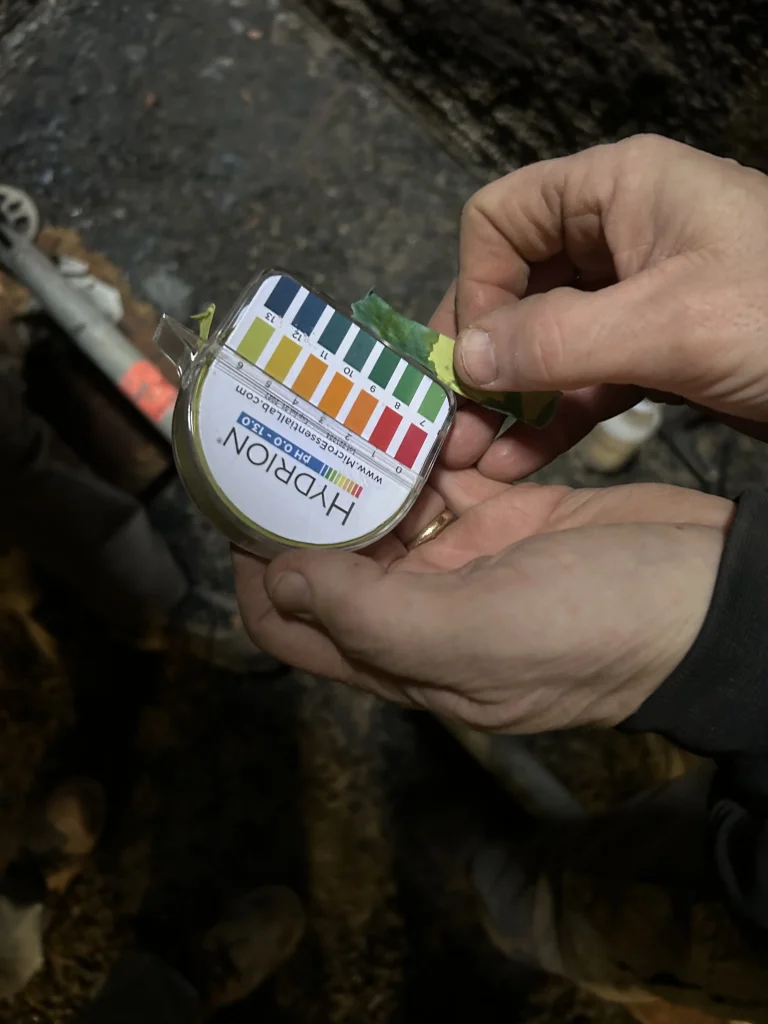
To ensure optimal performance and longevity of a new coating, it’s crucial to test the pH of a surface, as low pH levels can lead to coating failure. Use a pH pencil or pH test strips (litmus paper), wetting the surface with distilled water, and then comparing the color of the pencil mark or strip to a color chart to determine the pH level. A minimum 9 pH is required.
Step 7: Remove Abrasive Dust
If you use sandblasting, or grinding discs for surface preparation, it will produce dust and residual particles that settle on the treated surface. You must remove these impurities, so they do not affect the bond integrity. Use compressed air, brushes, or solvents to remove abrasive dust.
Step 8: Rinse Chemicals Off the Surface
If you utilize chemicals to prepare a surface, such as an acid wash, residual contamination will hinder the effectiveness of fresh coating or adhesives. You should rinse off the residue before applying an anti-corrosion coating to ensure proper adhesion. Also, you must capture, treat, and dispose of the generated wastewater to comply with applicable regulations.
Step 9: Dry the Surface
While Sauereisen offers coatings that can be applied to saturated surface dry (SSD) concrete, some coatings perform best when applied to dry surfaces. A wet surface can lead to the formation of pinholes during the curing phase. Moisture also prolongs drying times and can accelerate amine blush between coats. The presence of water on bare metal can trigger flash corrosion, which may persist beneath a freshly applied coating, causing delamination. Moisture on metal surfaces can also act as a bond breaker between the metal surface and the coating.
Humidity is another critical consideration. Verify that your coating is suitable for application under the prevailing humidity conditions. You can find specifications outlined in the relevant coating and application guidelines for each coating system.
On applications to concrete substrates, stop active water leaks and repair cracks prior to the coating installation as well.
Although surface preparation requirements vary based on the project and the coating product, if you follow these 9 steps, you can expect the successful application of a coating. Your coating will look more appealing, protect the substrate, and last much longer with proper surface prep.
Surface Preparation Methods
Professionals have a variety of surface preparation methods at their disposal. From chemical cleaning to the different forms of abrasive and water blast cleaning, to mechanical methods, each technique serves a specific purpose depending on the circumstances and the objective. Let’s explore some of the most popular ways to prep a surface.
Abrasive Blast Cleaning
Abrasive blast cleaning uses a jet of abrasive particles to remove damaged and contaminated concrete on concrete substrates and mill scale, rust, and other impurities on metal substrates.
Some non-metallic and metallic abrasives include aluminum oxides, chilled iron, ceramic, plastic, and natural materials such as garnet and coal slag (Black Beauty). The size of the abrasives affects the cleaning quality and speed. Fine abrasives work well on new surfaces, and coarse abrasives perform better on old, corroded surfaces with thick, deteriorated coatings.
Abrasive Blasting Guidelines:
Concrete – Refer to SSPC-SP13/NACE 6 Surface Preparation of Concrete for detailed guidelines and ICRI 3012.
Metal – Abrasive blast to a nominal 2.5 mil profile employing SSPC-SP 5-2007-NACE No. 1-2007 White Metal Blast for immersion and SSPC-SP 10 NACE No. 2-2024 for other service conditions. An SSPC-SP 6-2007-NACE No. 3-2007 Commercial Blast may be suitable for mildly corrosive atmospheric exposures.
Blast cleaning generates dust and debris on the surface, which must be completely removed.
Hand and Power Tool Cleaning
Applicators often carry out surface preparation for coatings using hand tools and power tools on metal and concrete. Hand tool cleaning with a wire brush or sanding block eliminates loosely attached mill scale, old coatings, and rust. This method often leaves behind a layer of firmly bonded paint or corrosion and is not highly recommended.
Power tools, including needle guns, rotary wire brushes, grinders and sanding discs, provide a more efficient, less labor-intensive approach, cleaning down to bare metal and solid concrete in some cases. Although power tool cleaning techniques do not clean as well as abrasive blasting, they serve as the only viable alternative in certain situations.
Wet Abrasive Blast Cleaning
Abrasive media is introduced into the water blasting stream to increase the aggressiveness of the blasting while at the same time minimizing airborne dust and debris.

In certain cases, rust inhibitors may be added to prevent flash corrosion on cleaned metal surfaces.
Ultra-High-Pressure Water Jetting
Ultra-high-pressure water jetting (UHP) works with pressures exceeding 10,000 psi to remove contamination and damaged materials from concrete and steel substrates without producing used abrasives that require cleanup. This method of surface preparation will provide the necessary surface profile on concrete but will not profile metal surfaces. Abrasive blasting or other mechanical means are required to profile metal surfaces.
Chemical Cleaning
Also called solvent cleaning, chemical surface treatments typically utilize specialized compounds formulated for the specific material and intended surface characteristics. Due to the environmental issues with this type of surface preparation, it is used infrequently, especially on larger projects. You can administer these treatments manually, through immersion, or by spraying. Notable examples include acid etching on concrete and phosphoric acid anodizing and chromate conversion coating on metal.
Solvent or acid cleaning poses environmental hazards and necessitates stringent safety protocols. They may impede coating application efficiency due to extended processing durations and the requirement for thorough rinsing to eliminate residual chemicals.
Sauereisen Offers Engineered Solutions for Your Properly Prepared Substrates
Protect your valuable investment with the best corrosion resistant coatings and linings on the market. At Sauereisen, we draw upon over 126 years of industry experience to produce high-quality corrosion resistant products. If you are uncertain about which coating or lining you need, contact us online at www.sauereisen.com or call Sauereisen at +1 (412) 963.0303 today!