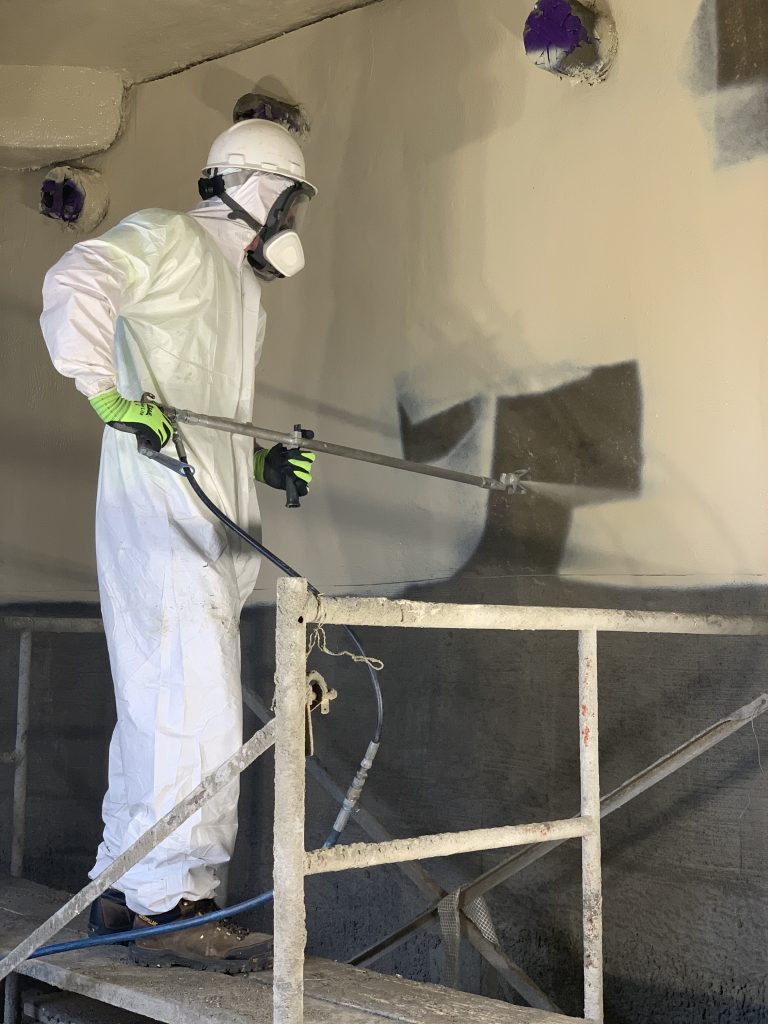
Protective linings are often the last line of defense against corrosion in wastewater infrastructure. While selecting the right protective lining system is critical, the success of any project ultimately depends on proper installation, inspection, and quality assurance.
For more than three decades, the Sauereisen SewerGard 210 Epoxy Lining Systems have protected concrete and steel structures in wastewater environments. To maximize performance and service life, Sauereisen has incorporated quality control and quality assurance programs into the manufacture and application of the Sewergard wastewater rehabilitation and protection products.
Start with Qualified Contractors
One of the most important decisions in any project is selecting the installation contractor. Sauereisen recommends that all applicators be factory trained and certified prior to installation.
Contractors should be able to provide documentation confirming training in all aspects of the application from surface preparation to inspection. Certified installers help reduce installation errors and improve overall project quality.
Maintain Responsibility with a Single Applicator
Surface preparation and coating application should always be performed by the same qualified contractor.
Separating responsibilities between multiple contractors can create uncertainty regarding accountability and often leads to inconsistent results. A single certified applicator maintains control of the entire installation process, from surface preparation through final coating application and the required inspection protocol.
Ensure System Compatibility
Protective lining systems frequently involve multiple components, including:
- Surface repair and resurfacing materials
- Water-stop and leak repair materials
- Corrosion-resistant coatings and linings
Using products from a single manufacturer will ensure compatibility and system performance. If materials from different manufacturers are proposed, written confirmation of compatibility should be obtained from the coating manufacturer to avoid performance issues or warranty concerns.
Proper Surface Preparation is Essential
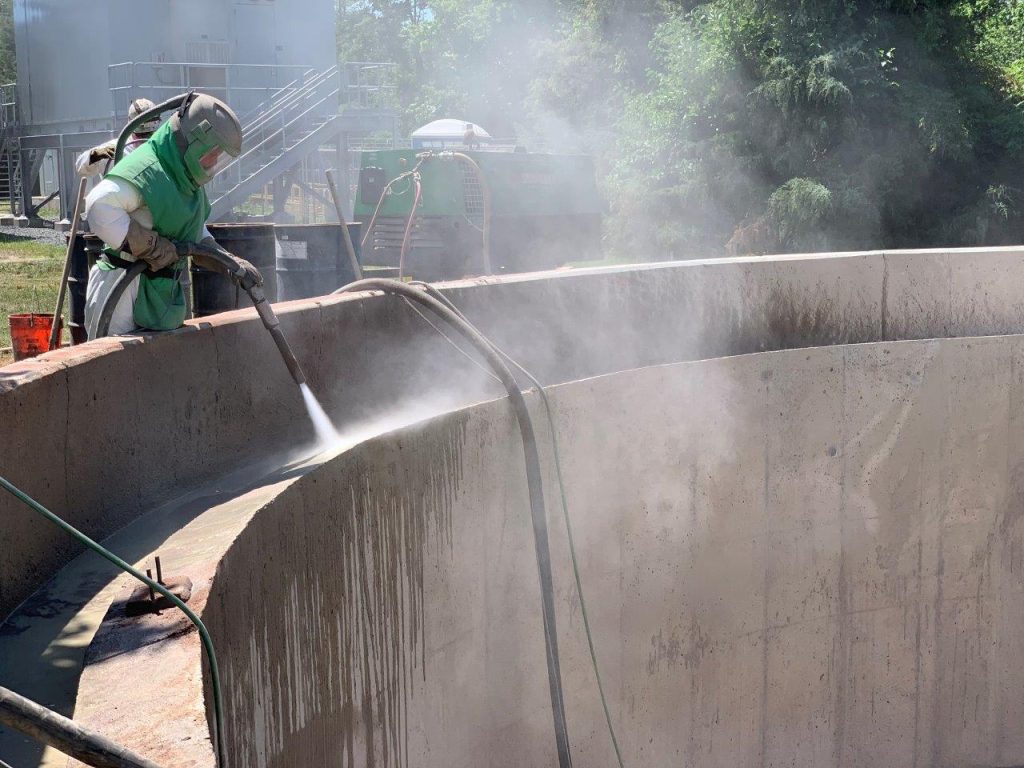
Surface preparation remains the foundation of application success. All surfaces must be made completely free of oil, grease and other contaminants, including curing and sealing compounds, that may inhibit the bond of the protective lining system.
Concrete and metal substrates should be prepared in accordance with:
- ICRI Guideline No. 03732 for concrete
- AMPP SSPC-SP13/NACE 6 for concrete
- AMPP SSPC-SP5 for immersion service or SP10 for non-immersion for metal
The main goal on new concrete is to completely remove laitance, expose aggregate and create a uniform surface profile comparable to ICRI CSP 5-6. Existing concrete requires removal of all damaged concrete and/or remaining laitance, and you must verify the pH is 9 or greater.
Without proper surface preparation, even the highest-performing protective lining system will experience adhesion failures.
Verify Concrete Strength and Moisture Conditions
Before installation, the prepared substrate should be evaluated for both tensile strength and moisture content.
Pull-off testing using ASTM D4541 or ASTM D7234 can verify the integrity and strength of the concrete surface.
Moisture testing can be in accordance with the ASTM D4263 Plastic Sheet Method test or the ASTM F1869 Calcium Chloride Test.
Excessive moisture, greater than 3 lbs. per square foot, can negatively impact coating adhesion and long-term performance, making these evaluations an important part of quality control.
Stop Active Leaks Before Coating
Active infiltration must be addressed before the installation begins.
After surface preparation, any visible water infiltration should be documented and reported. Water mitigation methods should be reviewed with the coating manufacturer to ensure that water-stop materials are compatible with both the resurfacing materials and the protective lining.
Achieve a Uniform Substrate
Repair and resurfacing materials play an important role in creating an acceptable substrate for coating application.
These materials are used to:
- Fill voids and bug holes
- Repair/replace deteriorated concrete
- Cover exposed aggregate
- Rebuild missing brick joints
- Create a uniform substrate with the proper surface profile
Resurfacing materials should generally be installed at a minimum thickness of 1/16 inch for epoxy-based products and 1/8 inch for cementitious-based products and cured and finished according to manufacturer recommendations.
A substrate with a uniform surface plane helps ensure uniform coating thickness and improved long-term performance.
Monitor Coating Thickness
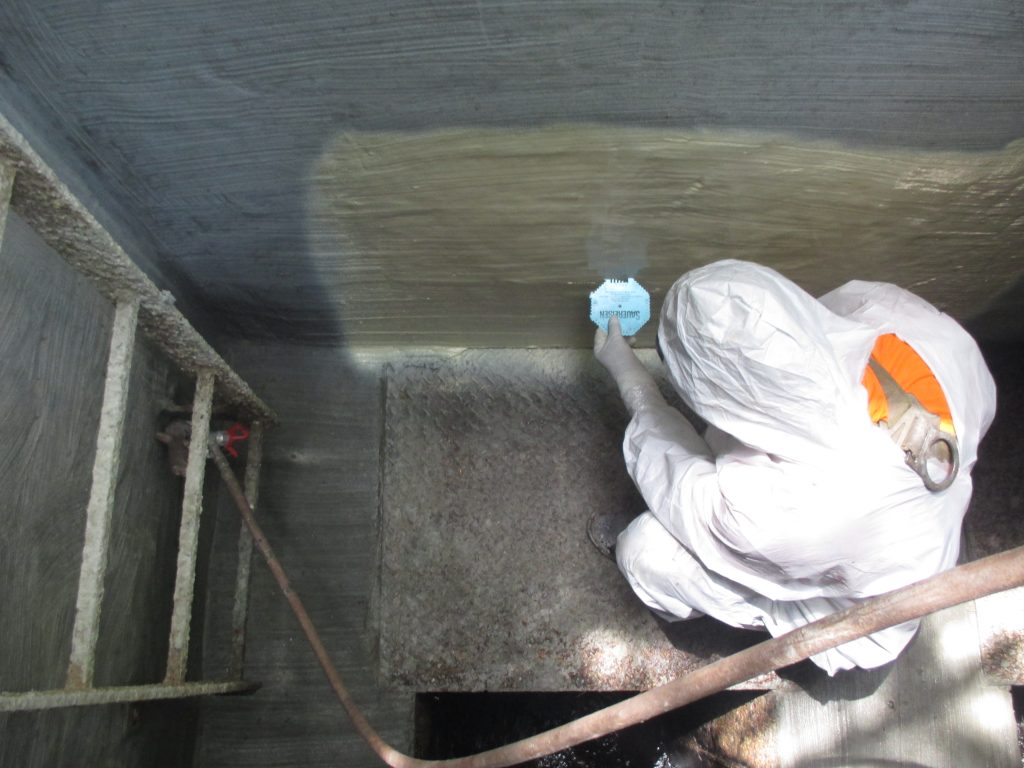
Wet film thickness measurements provide valuable quality control during installation.
ASTM D1212 and ASTM D4414 may be used to estimate coating thickness.
Contractors can also compare material usage rates with the actual coated surface area to verify that the specified thickness is being achieved.
Conduct Thorough Visual Inspections
Following application, the coating should undergo careful visual inspection.
To identify:
- Sags
- Pinholes
- Voids
- Blisters or cracks
- Missed areas
- Areas of inadequate thickness
Any deficiencies should be marked and repaired according to the coating manufacturer’s recommendations.
Verify Adhesion Through Pull-Off Testing
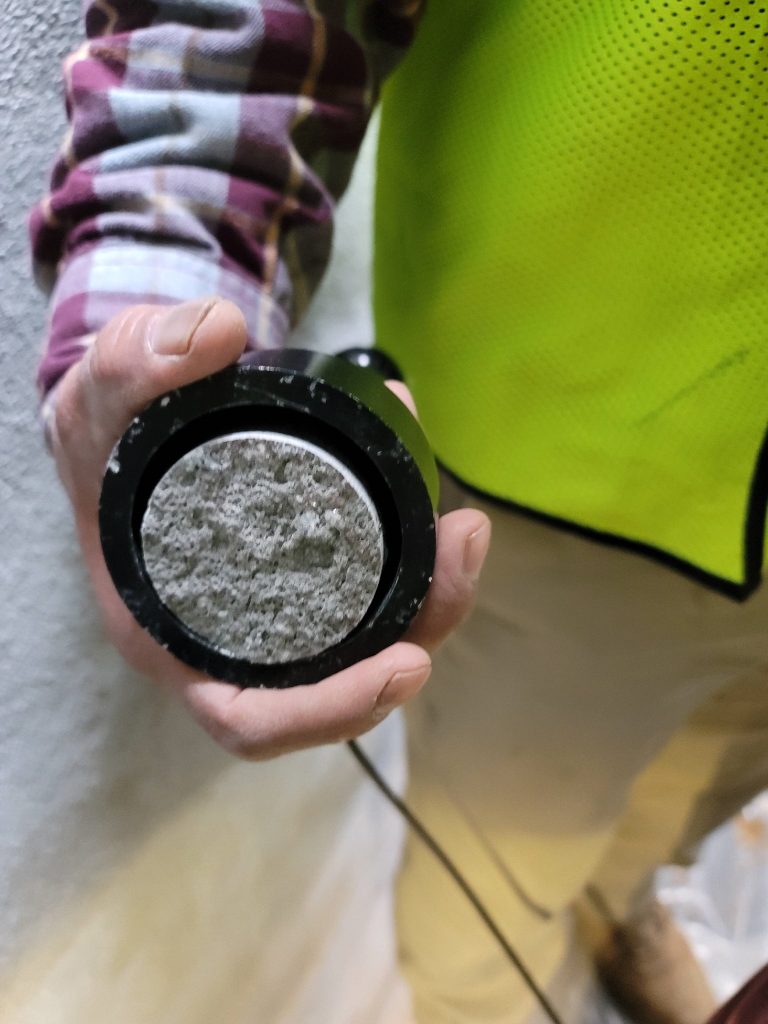
Adhesion testing provides confirmation that the coating system has properly bonded to the concrete substrate.
Testing is typically performed after a minimum 24-hour cure at 70°F, using ASTM D4541 or ASTM D7234 with testing frequency/location determined by the engineer.
Successful tests should achieve a minimum bond strength of 200 psi with concrete failure indicated by substrate material attached to the test dolly. Areas exhibiting inadequate adhesion should undergo additional evaluation and repairs as necessary.
Perform Holiday Detection Testing
Even visually sound coatings can contain small discontinuities or pinholes that allow corrosive environments to reach the substrate.
Holiday detection testing helps identify these defects using:
- NACE SP0188-2024
- ASTM D4787
Any holidays identified during testing should be repaired according to the manufacturer’s recommendations before the structure is placed back into service.
Specify Proven Performance
Testing provides additional confidence in coating performance.
Protective coatings should be tested for physical properties and chemical resistance in accordance with industry recognized ASTM standards. These tests can be performed in-house by the coating manufacturer or outsourced independently to verify that a given product will provide the expected level of protection.
Chemical resistance and long-term durability are needed in aggressive wastewater environments.
Require Documented Service History
Long-term field performance remains one of the strongest indicators of coating reliability.
The SewerGard 210 systems have been protecting wastewater structures since 1988. Project specifications should require documented case histories demonstrating successful service in similar applications, ideally with a minimum of five years of proven performance.
The Value of Independent Inspection
Third-party inspection adds another layer of protection for all parties involved in the project.
Independent inspectors typically retained by the owner or consulting engineer will verify compliance throughout all phases of the installation process. NACE-certified coating inspectors are particularly valuable because they understand:
- Concrete surface preparation standards
- Film thickness requirements
- Holiday testing procedures
- Adhesion testing methods
- Industry inspection practices
Independent inspection ensures that the installed system meets project specifications and provides confidence that the protective lining investment will deliver long-term performance.
Quality Assurance Protects the Investment
Wastewater structures operate in some of the most aggressive environments found in municipal infrastructure. A properly designed and installed protective lining system, such as a Sauereisen Sewergard 210 system, can provide decades of protection, but only when supported by comprehensive quality assurance procedures.
By incorporating strict quality assurance procedures into project specifications, owners, engineers, and contractors can improve installation quality, reduce risk, and maximize the long-term performance of a protective lining system such as the SewerGard 210 systems.