
Wastewater infrastructure operates in one of the harshest environments imaginable, constant moisture, corrosive gases, chemical exposure, and abrasion from solids and debris. Protecting concrete and steel infrastructure from deterioration is critical to maintaining system integrity, controlling long-term costs and ensuring that design service life expectations are met or exceeded.
High-build epoxy systems have become a proven solution for rehabilitation and protection in wastewater applications, in both collection and treatment. Their rapid thickness build, durability, chemical resistance and ease of application make them particularly effective in extending the service life of aging infrastructure. Use in new construction will also significantly extend service life and reduce overall maintenance and rehabilitation costs.
What Is a High-Build Epoxy System?
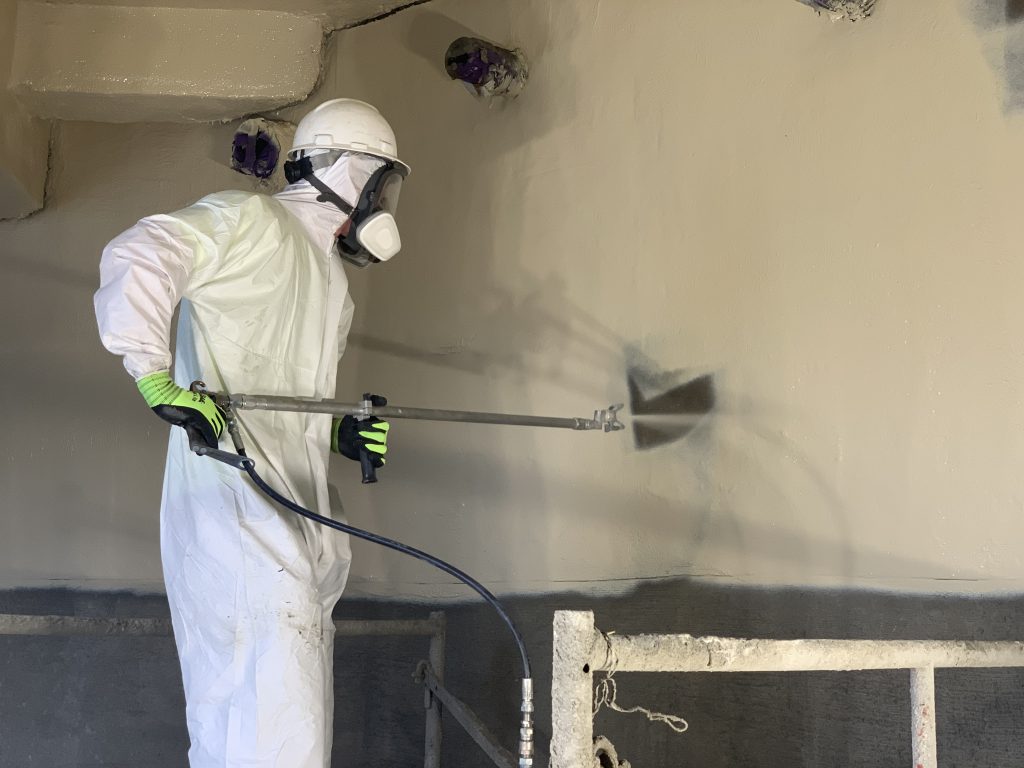
A high-build epoxy coating is a two-component resin system designed to be applied at thicker film builds, typically 60 to 125+ mils (0.5 to 3+ mm) in a single or multi-coat same day application.
Unlike thin film coatings, high-build systems:
- Provide high strength structural-level protection
- Bridge minor surface imperfections and voids
- Offer superior chemical resistance
- Provide superior abrasion resistance
- Deliver long-term barrier protection with reduced porosity
High-build epoxy systems are typically spray-applied, but some versions can be rolled or troweled depending on the specific product design parameters.
Why Wastewater Environments Demand Heavy-Duty Protection
Wastewater structures face aggressive conditions such as:
- Hydrogen sulfide (H₂S) gas exposure
- Sulfuric acid formation
- Chemical attacks from industrial waste
- Continuous and intermittent immersion
- Abrasion from grit and solids
- Freeze-thaw cycling in exposed structures
Without protective lining systems, concrete and steel deteriorate rapidly due to microbiologically induced corrosion (MIC) and the other conditions listed above, leading to costly repairs or replacement.
Key Advantages of High-Build Epoxy Systems
1. Exceptional Chemical Resistance
High-build epoxy coatings resist:
- Sulfuric acid
- Hydrogen sulfide gas
- Industrial discharge chemicals
- Chlorides and salts
This makes them ideal for:
- Manholes
- Lift stations
- Wet well
- Clarifiers
- Digesters
- And all other structures in wastewater collection and treatment systems
2. Superior Thickness & Barrier Protection
Because these systems are applied at high film thicknesses, they:
- Create a monolithic protective layer
- Preventing moisture intrusion
- Reduce permeability
- Resist abrasion
- Shield reinforcing steel from corrosion
The thicker lining significantly enhances durability compared to thin coatings.
3. Strong Adhesion to Concrete and Steel
Properly prepared substrates allow epoxy systems to:
- Mechanically bond tenaciously to concrete and steel
- Seal and fill cracks and surface voids
- Preventing delamination caused by inter-coat adhesion issues
Surface preparation (such as abrasive blasting or high-pressure water blasting) is critical to achieving long-term performance. Product manufacturers’ surface preparation requirements should be followed carefully to ensure strong bonding.
4. Structural Enhancement Capabilities
Certain high-build epoxy linings and resurfacing systems can:
- Rebuild deteriorated concrete
- Fill voids and spalled areas
- Restore structural integrity
This allows rehabilitation without full structure replacement, which saves municipalities substantial capital costs, downtime and service interruptions.
5. Reduced Lifecycle Costs
Although the upfront material cost may be higher than thin film coatings, high-build systems offer:
- Longer service life
- Reduced maintenance frequency
- Fewer emergency repairs
- Lower total cost of ownership
For asset managers, lifecycle cost savings are often the deciding factor.
High-build epoxy systems are suitable for both new construction and rehabilitation projects. They are used throughout collection and treatment systems to protect or prolong the service life in all manner of structures subjected to the harsh environments found in wastewater collection and treatment.
Installation Considerations
Quality control during installation is just as important as product selection. To maximize performance, projects should include:
- Thorough surface preparation (ICRI CSP standards recommended)
- Moisture testing prior to application
- Proper environmental controls (temperature & humidity)
- Trained, certified applicators with wastewater coating experience
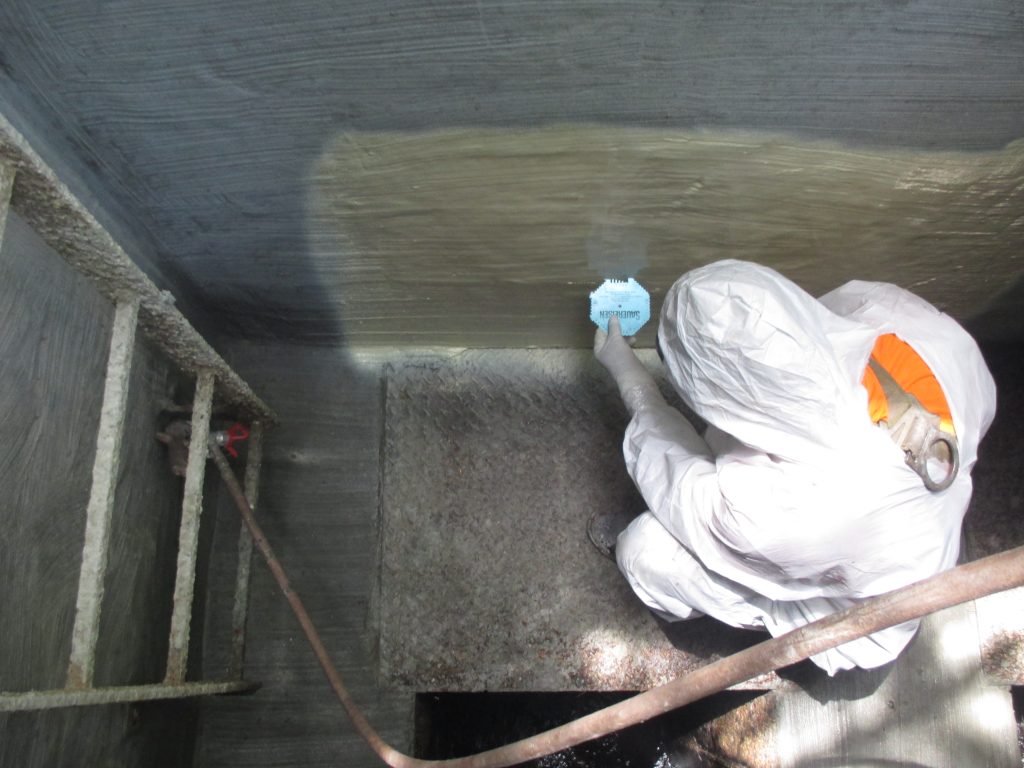
- Recorded Wet Film thickness readings during application
- Holiday continuity testing (spark testing)
- Pull off strength bond testing
Long-Term Performance Expectations
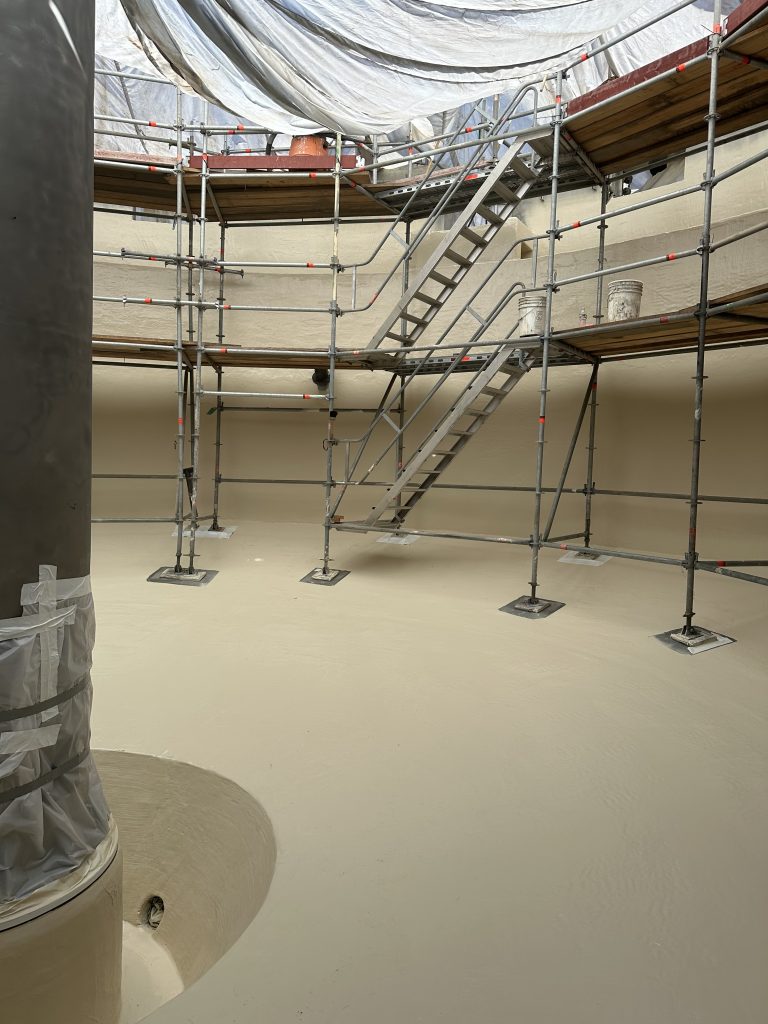
When properly installed, high-build epoxy systems can provide:
- 25+ years of service life
- Strong resistance to MIC and abrasion
- Low permeability
- Minimal maintenance requirements
- Continued structural protection
Routine inspections should still be part of any asset management program to monitor coating integrity over time.
Conclusion
Sauereisen SewerGard 210XHB High-Build epoxy offers a robust, long-term solution for protecting wastewater infrastructure from corrosion, chemical attack, and structural deterioration. Sewergard 210XHB, a 100% solids epoxy system designed specifically for municipal wastewater applications, can be installed for up to 300 mils in a single application with standard heated plural component spray equipment. The high build thickness, high-strength, durability, and ability to rehabilitate damaged surfaces makes it a preferred choice for municipalities and contractors focused on cost effective installation and sustainable asset management.
In environments where failure is costly and disruptive, investing in high-performance protective coatings and linings is not just smart, it’s essential.