
In industrial environments, whether it’s a chemical plant, wastewater facility, or manufacturing floor, the performance and longevity of protective systems hinge on one critical factor: material selection. And selecting the right material starts by asking the right questions.
Before choosing a coating, lining, polymer concrete, or refractory system, you must fully understand the application environment, the substrate, the exposure conditions, and the intended lifecycle. This blog walks you through a structured set of questions that professionals should ask before specifying or applying any protective or structural material.
1. What Is Your Application?
Understanding the intended use is the cornerstone of material selection.
- Is this containment, secondary containment, a floor, a process area, trench, pump base, or equipment foundation?
- Will it see foot traffic, forklift/machine traffic, or static loads only?
- Is the location indoors or outdoors? Covered or exposed?
- How long has the structure been in service? Older substrates may have hidden deterioration.
Why it matters: Different types of uses and locations require different protective systems. For instance, an outdoor secondary containment area exposed to UV and freeze-thaw cycles needs a different solution than an indoor pump pad exposed to acidic spills.
2. What Is the Substrate Material and Its Condition?
Before any product can be applied, the base material must be properly identified and assessed.
- Is the substrate concrete, steel, brick, or tile?
- How old is the substrate?
- What is its current condition—cracked, spalled, contaminated, or sound?
- What is the pH level of the substrate?
Why it matters: A coating that bonds well to new concrete may fail on oil-saturated, acid contaminated deteriorated concrete. Surface prep requirements vary drastically by substrate type and condition.
3. What Kind of Material Are You Looking For?
Defining the type of system helps narrow down your options.
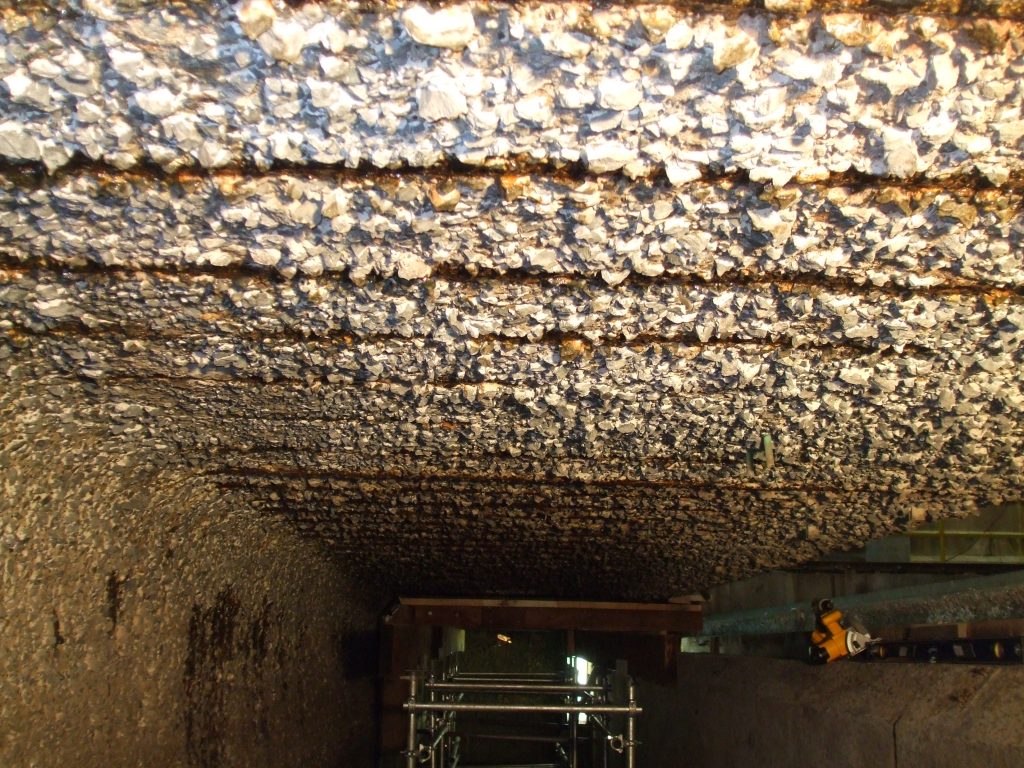
- Are you looking for a coating, lining, polymer concrete, refractory, or brick and mortar system?
- Is the system designed for protection, restoration, corrosion resistance, or structural repair, or a combination of these?
- What life expectancy is required of the system?
Why it matters: Each material class comes with its own advantages, limitations, and application methods. One size never fits all.
4. What Chemicals Will the Material Be in Contact With?
Chemical exposure is one of the most important factors in determining material performance.
- What specific chemicals will be present?
- What is their concentration (e.g., 15% sulfuric acid vs. 98%)?
- What is the degree of exposure? Will it be constant immersion, intermittent splash or spill, or vapors only?
- Are there routine maintenance and clean up procedures performed in the area?
Why it matters: Even the best coating can fail prematurely if not rated for high-concentration chemicals or immersion service.
5. What Temperature Range Must the Material Withstand?
Thermal conditions can significantly affect performance and longevity.
- What are the lowest and highest temperatures the system will see?
- Is the exposure constant, cyclical, or caused by environmental changes (e.g., sun exposure) or process heat?
Why it matters: Many coatings and polymer systems have thermal limits, plus many chemicals become more aggressive at higher temperatures. High-temp or cycling conditions can cause cracking, delamination, or failure if the wrong material is chosen.
6. Who Will Be Applying the Material?
Application quality is as important as material quality.
- Will this be done by in-house staff, a pre-selected applicator, or are you still looking for an experienced installer?
- Does the applicator have experience with the chosen system and is the applicator aware of the importance of proper surface preparation?
- Is the applicator trained and approved by the materials’ manufacturer?
Why it matters: Some systems are forgiving; others require certified or highly trained professionals. Specifying a product that requires specialized application without a capable crew can lead to delays or failures.

7. What Is Your Target Start Date and Time Frame?
Timing influences everything from material selection to project planning.
- Is this during a scheduled shutdown or outage?
- Do you need a fast-cure or rapid return-to-service product?
- What’s the lead time for materials and labor?
Why it matters: If your window is tight, you may need to avoid long-cure systems or options requiring extensive prep and layering.

Choosing the correct material isn’t just about the product—it’s about the process. Asking these questions early enables smarter decision-making, better performance outcomes, more cost effective applications and longer-lasting protection.
Whether you’re protecting a trench, lining a tank, or rebuilding a pump pad, the key to success is understanding your application, environment, and expectations. The more you ask up front, the fewer problems you’ll have down the road and the more likely you will be able to choose the right product for the job.
Need help with a specification?
Our team can assist in evaluating your application and helping you find the right solution tailored to your conditions. Sauereisen offers expert advice on product solutions for corrosive environments and provides application guidance tailored to your needs. We’ll help you find the right solution – Contact us at www.sauereisen.com or call Sauereisen at +1 (412) 963.0303 – Let’s talk before you pour, trowel or spray.