
Why Polymer Concrete Is Replacing Traditional Linings
Industrial pickling operations create some of the harshest corrosion environments found in manufacturing facilities. Steel processing plants routinely expose containment areas, trenches, and floors to concentrated acids and caustics, elevated temperatures, and aggressive cleaning chemicals that rapidly deteriorate conventional concrete and traditional protective coatings and linings.
In steel pipe pickling and rinse operations, sulfuric acid and caustic splash, spill, and immersion conditions attack substrates continuously. Over time, many traditional acid brick and membrane linings, thermoplastic liners and resinous based coatings and linings begin to fail due to thermal cycling, mechanical abuse, chemical permeation, or joint deterioration. Facilities are increasingly turning into polymer concrete systems as a long-term corrosion control solution designed to minimize downtime and maximize service life.
The Corrosion Challenge in Pickling Facilities
Pickling tanks are used to remove mill scales, rust, and oxidation from steel surfaces before further processing. These systems commonly utilize sulfuric acid solutions at elevated temperatures along with caustic neutralizing solutions, creating a demanding environment for containment structures.
Typical corrosion challenges include:
- Sulfuric acid splash and spill exposure
- Continuous wet/dry cycling
- Elevated operating temperatures
- Chemical attack from caustic neutralizing and cleaning materials
- Mechanical loading and abuse from heavy traffic and large steel tanks and equipment
- Joint movement and substrate cracking
Traditional concrete is highly vulnerable under these conditions. Acid and caustic attack dissolves cementitious materials, weakens the substrate, and leads to structural deterioration. Conventional coatings and liners, including acid brick, may initially provide protection, but long-term durability becomes a concern when exposed to concentrated chemicals and constant physical abuse.
Why Facilities Are Transitioning to Polymer Concrete
Polymer concretes offer a different approach to corrosion protection. Instead of relying solely on a thin protective film or brick work with multitudes of joints, polymer concrete systems create a highly chemical-resistant, high strength, monolithic structural surface capable of withstanding severe industrial exposure.
Benefits include:
- Exceptional resistance to sulfuric acid and caustics, with resistance through the entire thickness of the system
- High compressive strength
- Resistance to thermal shock and impact
- Reduced maintenance requirements
- Long-term containment reliability
- Faster return-to-service compared to major liner replacement projects
- Overall cost savings when downtime losses are calculated into the equation
For facilities operating continuously, minimizing outages is critical. Replacing failed liners can require significant downtime and the subsequent loss of production is costly. Polymer concrete systems help reduce those interruptions while improving long-term performance.
Case History: Specialty Steel Tube Pickling Rinse Line Containment
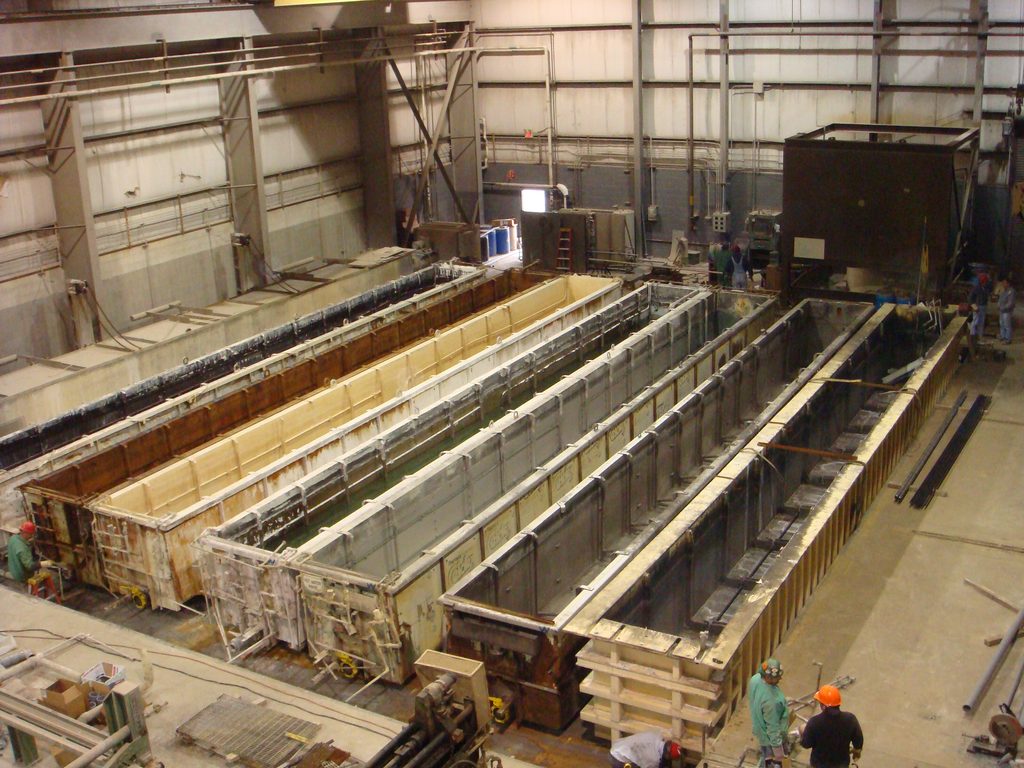
A notable example is the containment renovation project on a tube pickling rinse line area completed at a specialty tube manufacturing plant in western Pennsylvania, where traditional lining systems had consistently failed.
Project Environment
The facility operated under severe chemical exposure conditions including:
- 15% to 98% sulfuric acid at temperatures up to 150°F
- Caustic cleaning and neutralizing materials
- Continuous acid splash and spill from batch steel pipe rinsing operations
- Heavy traffic and physical abuse
The Remedy – A Sauereisen Epoxy Novolak Polymer Concrete System
The polymer concrete products utilized for the renovation included:
- Sauereisen No. 501 Conoweld Epoxy Primer
- Sauereisen No. 265 Epoxy NovolaK Polymer Concrete
- Sauereisen No. 69 Joint Compound
Project Scope
The renovation involved a large containment pit totaling over 4,000 square feet. Roughly 98,000 pounds of No. 265 Polymer Concrete were poured at a 2-inch thickness to create a durable corrosion–resistant containment lining in the structure.
The polymer concrete replaced a failing thermoplastic liner system, allowing the pickling rinse tanks to be positioned directly on the new surface.
Since that initial application, the facility has used Sauereisen polymer concretes to solve severe corrosion problems in other areas of the plant, installing an additional 300,000 plus pounds of the No. 265, along with over 140,000 pounds of another Sauereisen polymer concrete, No. 54 SG, a potassium silicate-based material that resists all concentrations of sulfuric acid, even at elevated temperatures.
Expansion joints in these applications were protected using Sauereisen No. 69 Elastomeric Joint Compound to accommodate movement while maintaining chemical resistance.
Long-Term Corrosion Control Strategy
Facilities exposed to aggressive chemicals are increasingly evaluating total lifecycle cost instead of simply the initial installation cost. While traditional coatings and liners may appear economically upfront, repeated maintenance shutdowns, with lost production and the cost of repairs, especially emergency repairs, can significantly increase overall operational expenses over time.
Polymer concrete systems help industrial facilities:
- Extend infrastructure service life
- Reduce emergency repairs
- Improve containment reliability
- Lower long-term maintenance costs
- Maintain production schedules
For operations handling sulfuric acid, hydrochloric acid, caustics, or other aggressive chemicals, selecting the proper corrosion-resistant system is critical to both safety and productivity. Sauereisen polymer concretes are available in a variety of polymer formulations to handle most any chemical exposure.
Conclusion
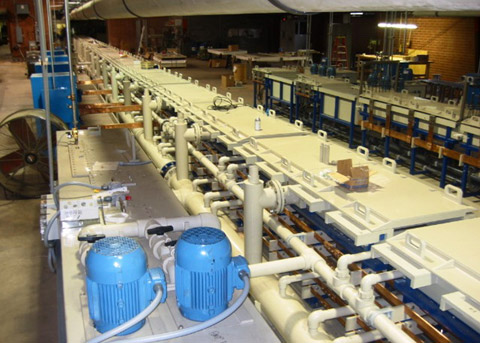
Industrial pickling operations demand corrosion protection systems capable of surviving continuous aggressive chemical exposure, mechanical stress and physical abuse. As facilities seek longer lasting solutions with reduced maintenance requirements and costs, polymer concrete systems are becoming a preferred option for containment pits, tank foundations, trenches, and process areas.
The successful specialty tube manufacturing pickling rinse line containment renovation described above demonstrates how polymer concrete technology can replace failing liner systems and provide long-term protection in severe chemical environments, helping facilities maximize production time and operational reliability, while reducing overall maintenance costs.