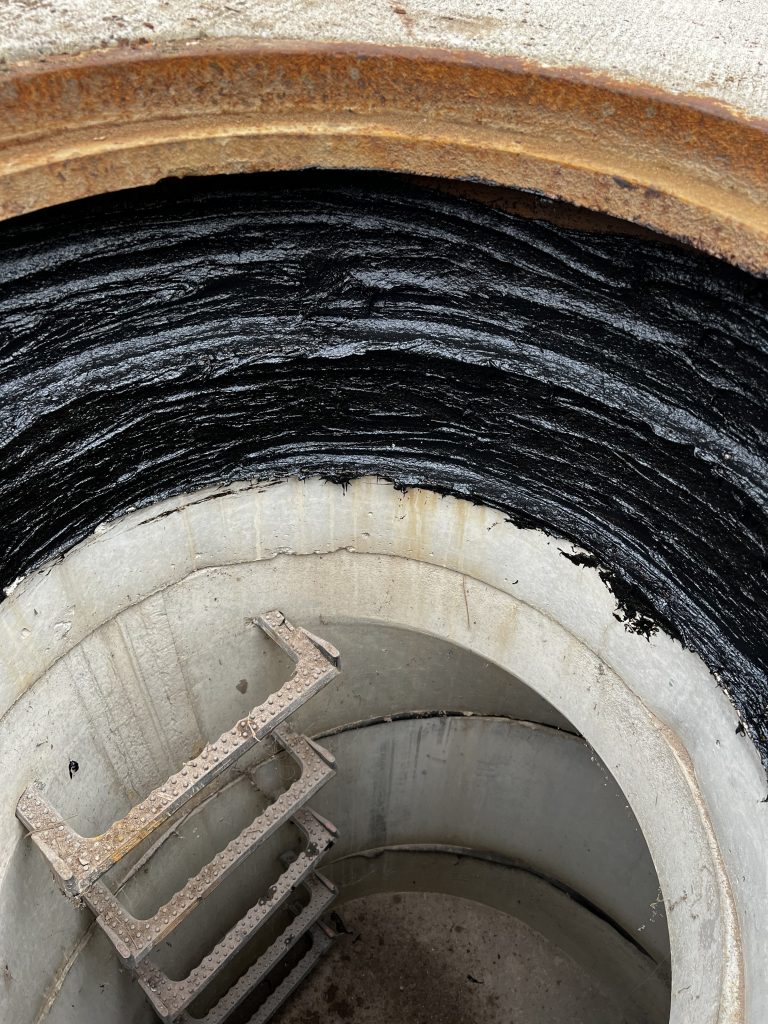
Water infiltration through manholes is one of the most common, and costly, problems in sanitary sewer systems. The manhole chimney is the top, roughly one-foot vertical section of the manhole where the manhole top barrel, grade adjustment rings and manhole lid frame are located. This area is considered the weakest part of the manhole structure. Over time, traffic loading, freeze thaw cycles, expansion and contraction differentials, impact loading and deteriorated, aging construction materials contribute to the degradation of the manhole chimney sections. This ultimately leads to the infiltration of water and soil through openings and joints between the various chimney sections of the manhole. In addition to water infiltration, a deteriorated manhole chimney area can lead to structural failure in that area, resulting in settlement and cracking of the area surrounding the manhole. Since most manholes are located in roadways, this failure can lead to costly and dangerous road cave ins.
Just as importantly, when groundwater enters through deteriorated frames, covers, and chimney sections, it increases treatment costs, overloads systems during storms, and accelerates structural damage. Overloaded systems can also cause sanitary sewer overflows, which cause environmental issues and can result in costly fines.
One of the most effective and economical solutions is the installation of chimney seals. These flexible internal or external sealing systems are specifically designed to prevent water from entering the manhole structure at its most vulnerable point: the chimney area.
What Is Manhole Inflow and Infiltration?
Inflow and Infiltration, commonly known as I & I, occurs when groundwater seeps or flows into the sewer system through cracks, joints, or porous materials. The manhole chimney area is particularly susceptible because:
- It experiences constant traffic vibration in roadways
- It experiences differentials in expansion and contraction between steel the frame and the masonry portions of the chimney area, causing movement and cracking
- Mortar joints deteriorate over time
- Freeze-thaw cycles create cracks
- Ground settlement shifts the structure, creating small gaps, cracks and openings, which can allow significant I & I during heavy rainfall or high groundwater conditions.
Why Focus on the Chimney Area?
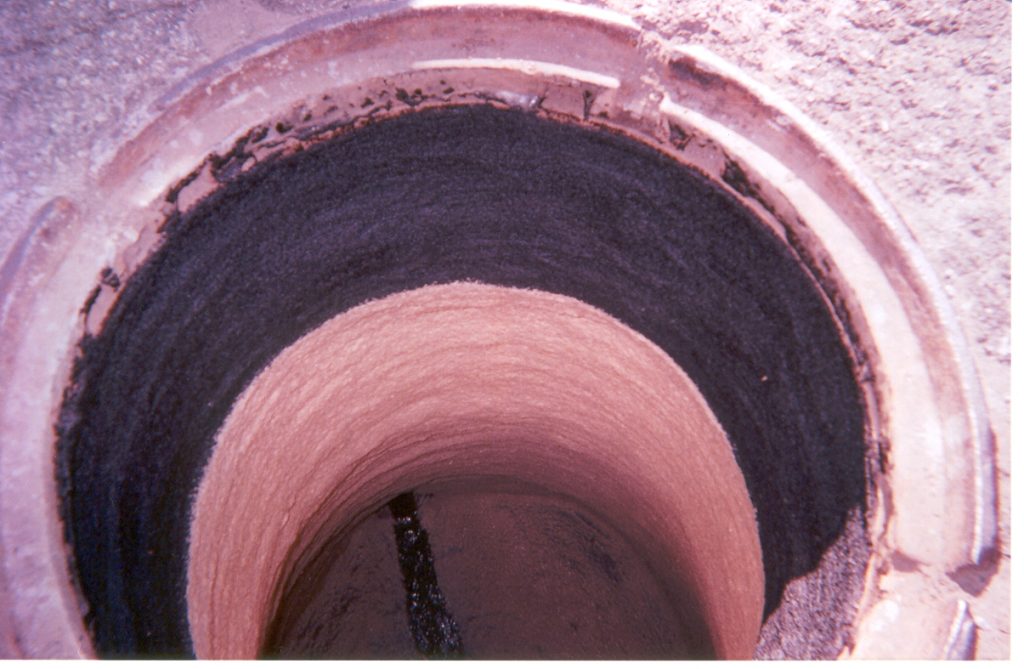
The chimney section is often constructed using adjusting grade rings and mortar, which naturally degrade over time. As infrastructure ages, this becomes a primary pathway for:
- Surface water intrusion
- Groundwater seepage
- Debris entry
- Structural weakening
Targeting this area provides a high return on investment because sealing the chimney can cost effectively eliminate a major portion of total manhole infiltration.
What Are Chimney Seals?
Chimney seals are flexible rubber or elastomeric sleeves installed either:
- Internally (inside the manhole)
- Externally (around the outside of the chimney)
- Or as frame seals between the casting and the structure
They create a watertight barrier that accommodates movement while preventing water intrusion.
Common Materials:
- EPDM rubber
- Neoprene
- Stainless steel compression bands
- Fiber-reinforced, urethane-modified asphalt, such as Sauereisen F-88 Manhole ChimneySeal
Benefits of Chimney Seals
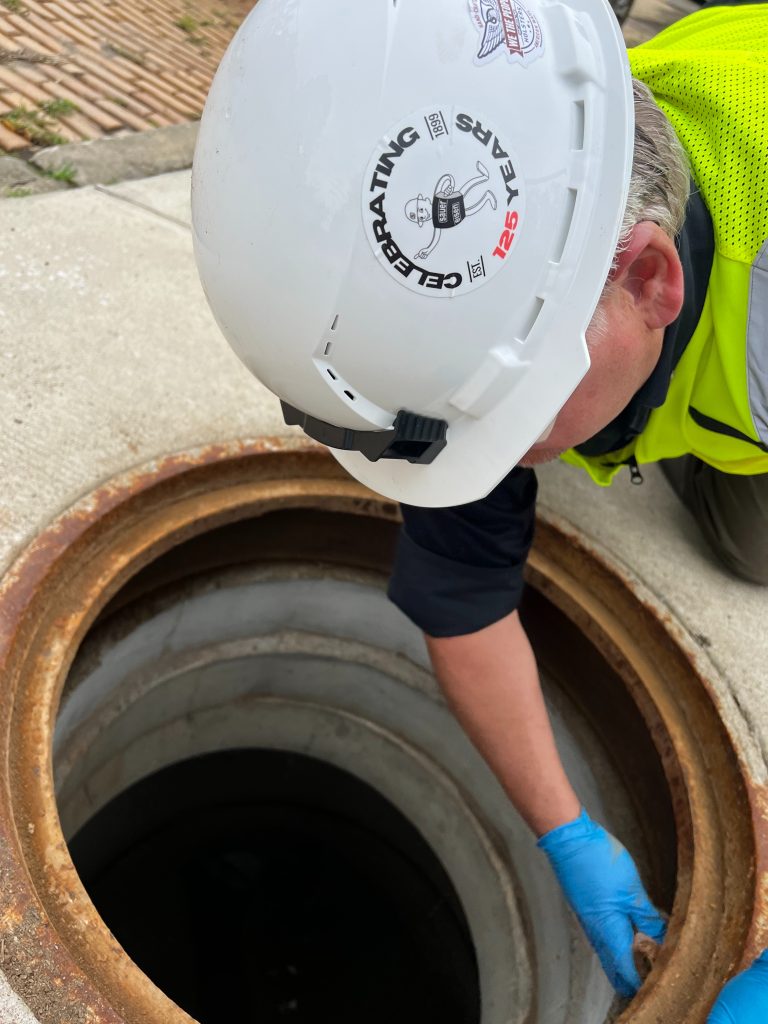
1. Significant Reduction in I&I
By sealing the most vulnerable areas, utilities can significantly reduce unwanted water entering the system.
2. Cost Savings
Lower infiltration means:
- Reduced pumping costs
- Lower treatment costs
- Less system overloading
- Fewer sanitary sewer overflows (SSOs)
3. Extended Infrastructure Life
Sealing protects:
- Mortar joints
- Concrete components
- Metal frames
4. Quick Installation
Most internal chimney seals can be installed:
- Without excavation
- In less than a few hours
- With minimal traffic disruption
Internal vs. External Chimney Seals
| Feature | Internal Seal | External Seal |
| Excavation Required | No | Yes |
| Installation Time | Faster | Considerably Longer |
| Cost | Lower Overall | Higher due to excavation |
Internal chimney seals are typically preferred for rehabilitation projects because they eliminate the need for digging, surface restoration, and service interruptions.
Signs Your Manholes Need Chimney Seals
Look for:
- Visible water trickling down walls
- Rust or corrosion on frame and cover
- Cracked mortar joints
- Evidence of past patch repairs
- High I&I during wet weather events
CCTV inspections, flow monitoring and smoke testing can also identify infiltration sources.
Best Practices for Installation
- Inspect and measure carefully to ensure proper fit for mechanical seals.
- Clean surfaces thoroughly and stop active leaks before installation.
- Follow manufacturer installation specifications.
- Document installations and perform follow-up inspections for asset management records.
Long-Term Performance
High-quality chimney seals are designed to:
- Withstand traffic vibration
- Resist chemical exposure
- Handle thermal expansion and contraction
- Last 20+ years under normal conditions while continually reducing manhole I & I
Routine inspections during maintenance cycles help ensure continued performance.
Conclusion
Reducing infiltration in manholes is essential for maintaining efficient and compliant wastewater systems. Chimney seals offer a practical, cost-effective, and minimally disruptive solution to one of the most common infiltration points.
For municipalities and utilities seeking to reduce I&I without major excavation, internal chimney seals represent a smart infrastructure investment with measurable long-term benefits.
Manhole infiltration is a manageable problem when addressed proactively. Combining chimney seals with high-performance protective materials like Sauereisen SewerGard 210 epoxies delivers both corrosion resistant restoration and watertight protection.
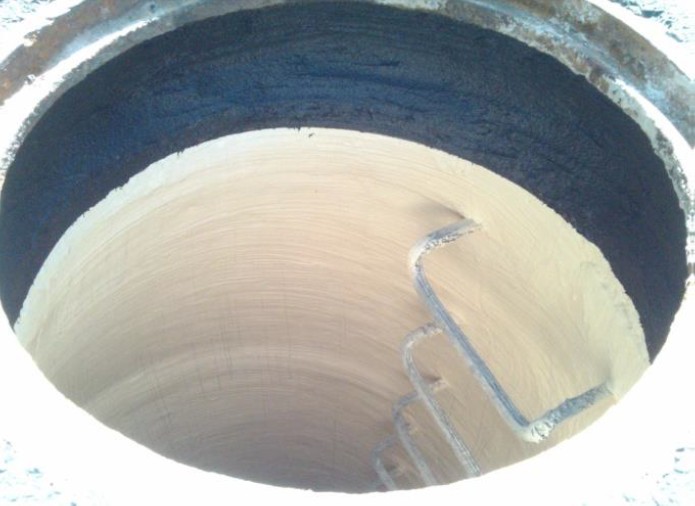
Restored manhole with Sauereisen Sewergard 210 epoxy and flexible F-88 Chimney Seal is watertight and resistant to corrosion.
For municipalities seeking cost-effective I&I reduction strategies, this approach offers measurable ROI, improved reliability, and extended infrastructure life.