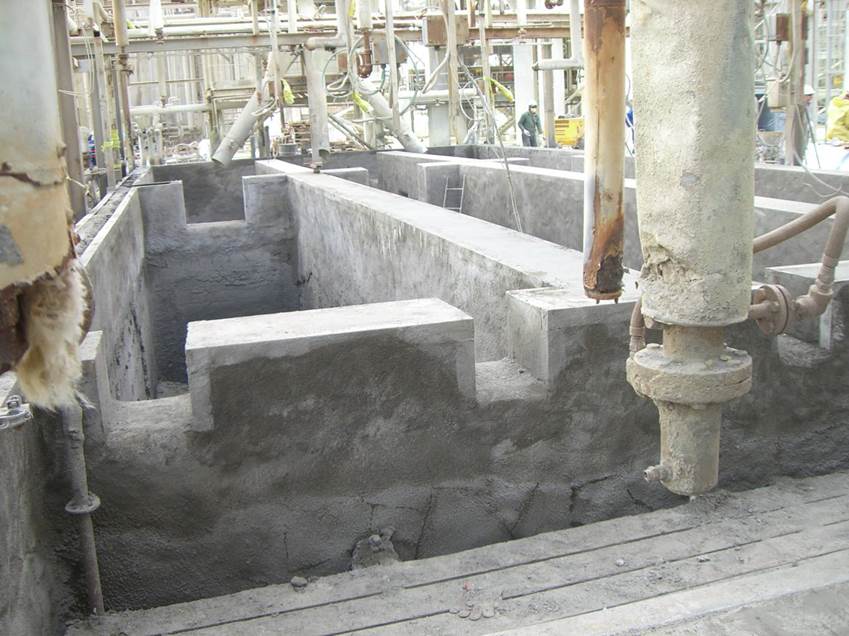
Sulfur pits are critical components across oil refineries, sulfuric acid plants, petrochemical facilities, fertilizer production sites, and other numerous other chemical operations. Whether sulfur is being melted for sulfuric acid production, used as an ingredient in downstream processes, added as a component in fertilizers, or simply stored and sold to end users, every sulfur pit shares one constant requirement: long-term protection against corrosion.
Because sulfur pits operate under high temperature, high acidity, and highly corrosive vapor conditions, heavy-duty protective lining systems, such as offered by Sauereisen, are essential. Without such linings, both the molten sulfur and the gases released during melting will rapidly attack and deteriorate concrete or steel containment structures.
Why Sulfur Pits Are So Aggressive
When sulfur is heated and exposed to oxygen, sulfur dioxide (SO₂) and sulfur trioxide (SO₃) form. In the presence of humidity, these gases condense into sulfuric acid (H₂SO₄), one of the most destructive acids for both concrete and steel.
SO₂ itself is a toxic, pungent gas with a characteristic rotten odor. It can exist as a yellowish, viscous liquid and is soluble in water at all concentrations, adding further corrosive potential.
Simply put: the environment inside a sulfur pit is harsh, dynamic, and unforgiving.
Traditional Lining Systems
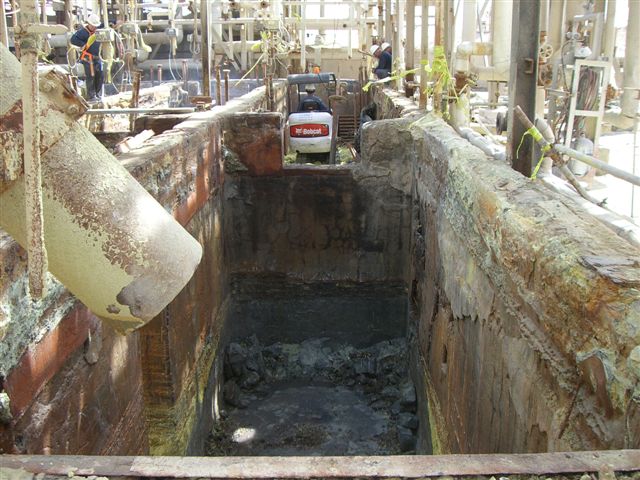
The classic protective linings for sulfur pits include:
- A high-temperature acid resistant membrane
- Acid-resistant brick, commonly Duro Type III due to its low porosity and water absorption, with acid resistant potassium silicate mortar
- Acid-resistant potassium silicate gunite refractory or polymer concrete and membrane systems
Potassium silicate mortars, refractories and polymer concretes have long been favored for their high temperature resistance and excellent acid resistance (pH 0–7). Brick linings offer durability, though they are more labor-intensive and far more costly to install and maintain compared to monolithic gunite refractory and polymer concrete linings.
The pH Challenge:
While not common, some sulfur pit operations introduce limestone or other alkaline materials into pits to help neutralize acidity. While this practice can protect concrete, it raises the pit’s pH above 7 and this creates an entirely new problem, as potassium silicates are not suitable for alkaline environments.
In these cases, consult corrosion experts like Sauereisen for recommendations when pit chemistry shifts alkaline.
Why Sodium Silicate Is No Longer Used
Sodium silicate was once common in sulfur pit linings, but it has a fatal flaw. When exposed to sulfuric acid, it forms a globular salt that continues growing within the lining matrix. As the salt expands, it builds internal stresses, leading to:
- Cracking
- Spalling
- Lining failure
- Exposed substrate
Potassium silicate also forms a salt when reacting with sulfuric acid, but its salt remains stable and does not grow, making it vastly superior for acidic environments. This is why potassium silicate replaced sodium silicate as early as the 1940s–50s.
Sauereisen was at the forefront of these developments, with decades of proven performance in sulfur pit applications using potassium silicate products.
Sauereisen Solutions
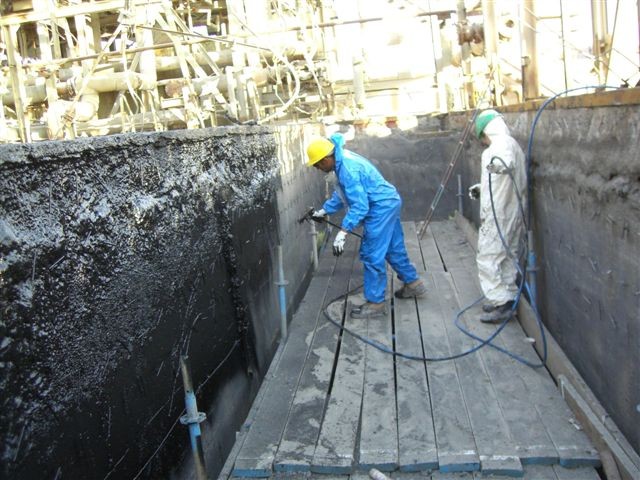
- A single-component corrosion resistant asphaltic membrane applied at 125 mils
- Flexible, corrosion-resistant monolithic membrane
- Excellent resistance to acids, alkalies, and salts
- Handles substrate movement form thermal cycling
- Elasticity and adhesion from –60°F to 300°F (–51°C to 149°C)
- Suitable for concrete and steel
- Used under brick, gunite or castable linings
Recommended Dual-Lining System
To handle both acidic condensates and high operating temperatures, Sauereisen recommends a dual-system approach with the application of a Potassium Silicate lining over our High Temperature Membrane 89.
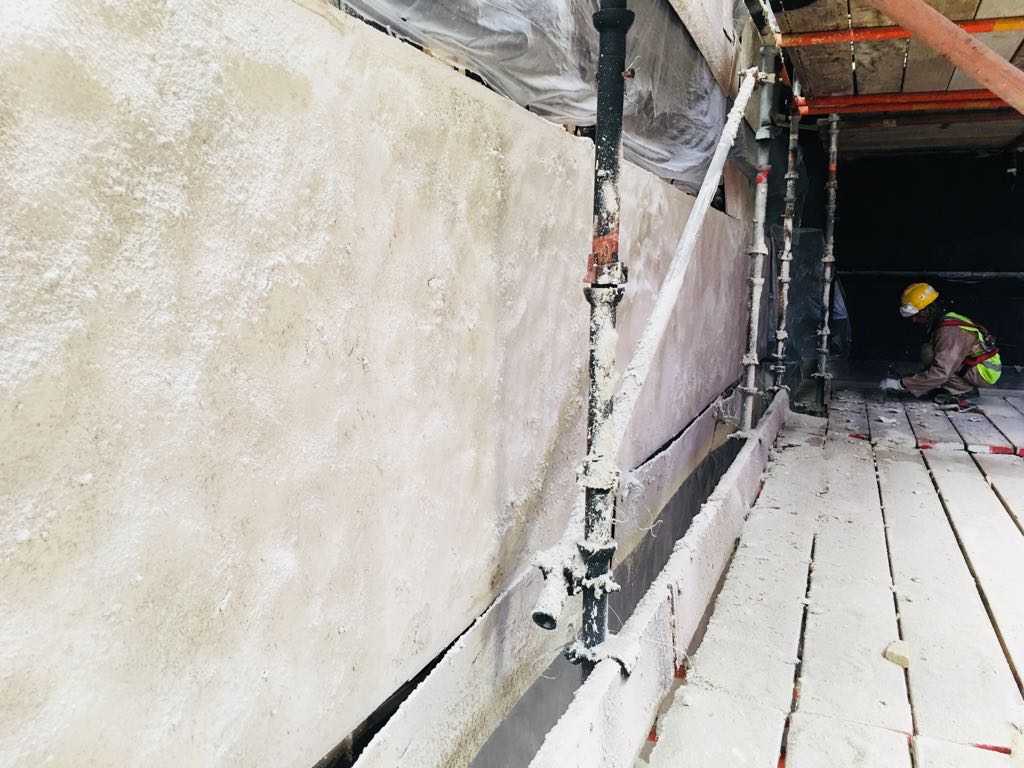
- Gunite applied for rapid installation
- Ideal for pH 0-7 environments
- Resists sulfuric, hydrochloric, nitric, and phosphoric acids
- Resistant to most solvents, oils, and acid salts (except HF)
- Withstands temperatures up to 1250oF
- Decades of proven success in sulfur pit service
Acidproof Concrete 54SG Structural Grade
- Pumpable/castable grade
- Ideal for new construction or rehabilitation applications
- Ideal for pH 0–7 environments
- Resists sulfuric, hydrochloric, nitric, and phosphoric acids
- Resistant to most solvents, oils, and acid salts (except HF)
- Withstands temperatures up to 1400oF
- Structural capabilities
- Proven performance in sulfur pit service
Conclusion: 126 Years of Corrosion Expertise
Sauereisen has been solving corrosion challenges in sulfur pits for over a century, dating back to the earliest use of silicate mortars. Our engineered systems are trusted worldwide for protecting this critical infrastructure in the harshest environments.
With a global network of technical representatives across the U.S., Europe, Latin America, and the Pacific Rim, Sauereisen remains committed to delivering durable, proven, and engineered solutions that extend the life of critical assets.